

Bulgaria’s Dara secures a historic win at Eurovision 2026 in Vienna during an exceptionally tense year defined by international boycotts.
There is a specific kind of madness that takes place when geopolitical friction meets three minutes of pyrotechnics and a dance beat. The 70th Eurovision Song Contest concluded on Saturday night at the Wiener Stadthalle in Vienna, and for all the institutional insistence that the event remains an apolitical display of global goodwill, the room told a completely different story.

The immediate narrative is one of a historic upset. Bulgaria, a country that had taken a three-year hiatus from the competition due to prohibitive costs, claimed its first-ever victory. The performer, a seasoned talent show veteran named Dara, bypassed the usual avant-garde kookiness of the evening—such as Lithuania’s silver-painted singer screaming about artificial intelligence—and delivered a hyper-polished club track titled "Bangaranga." Inspired by ancient Bulgarian rituals meant to ward off evil spirits, the song took a massive public and national jury consensus to finish 173 points ahead of the competition, marking the largest winning margin in the history of the event.
But the victory lap felt secondary to the underlying tension that has compromised the European Broadcasting Union all season. Five nations, including Spain, Ireland, and the Netherlands, boycotted the 2026 iteration entirely to protest the inclusion of Israel amid the ongoing war in Gaza. Outside the venue, demonstrators mocked the official slogan, "United by Music," while inside, the EBU desperately tried to enforce neutrality rules, including a ban on third-party promotional campaigns to prevent voting manipulation. Israel’s entrant, Noam Bettan, delivered a multilingual performance that managed to escape audible jeering during the broadcast, though a wave of boos shook the 16,000-seat arena the moment his name briefly touched the top of the leaderboard during the voting sequence.
The juxtaposition was stark. On one hand, you have the high-camp theater of European pop, where a Finnish violinist in thigh-high boots represents the peak of mainstream entertainment. On the other, you have the bureaucratic tightrope of an organization defending its double standards, specifically why Russia remains indefinitely banned while other conflicting nations are allowed to sing through the noise. Pop music has always been a convenient shield for uncomfortable truths, but as the contest prepares to head to Sofia next year, Vienna proved that you can only crank the volume up so high before the outside world starts bleeding into the mix.
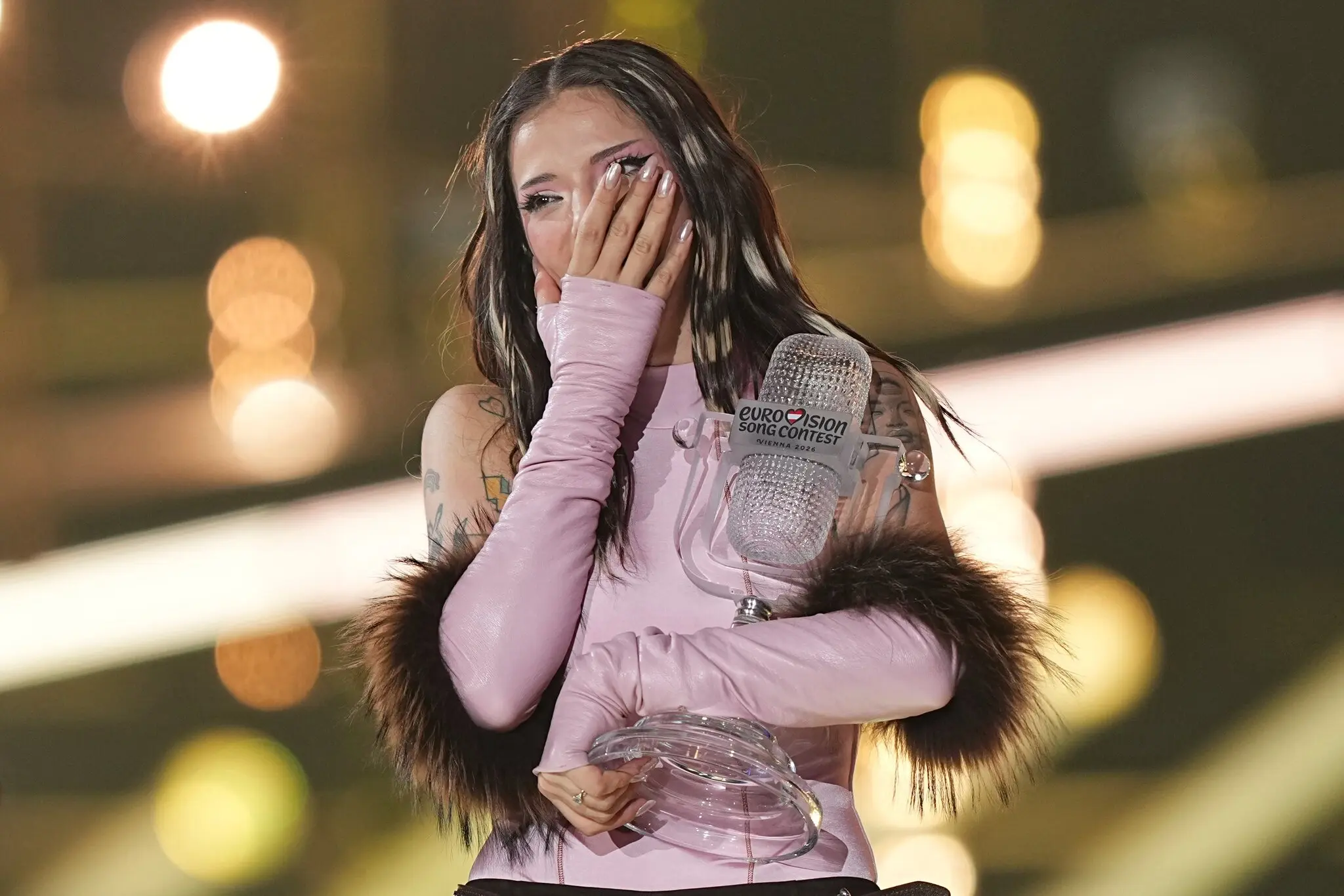
*Photo Credit : Martin Meissner/Associated Press


Let’s keep in touch.
Discover more about high-performance web design. Follow us on Twitter and Instagram.